

Dating a guy with performance anxiety can leave you unsure how to respond during intimacy. Start with calm reassurance, make stopping easy, and discuss what helps outside the bedroom.
Support includes affection without sexual obligations and honest conversations about both partners’ needs. You can help create a comfortable experience, but resolving his anxiety is not your responsibility.
Table of Contents
Understanding His Performance Anxiety
Sexual performance anxiety involves worry about sexual activity, such as maintaining an erection, reaching orgasm, or satisfying a partner. Monitoring the body and anticipating problems can make it harder to stay engaged, while a difficult encounter may increase worry about the next.
Why a New Relationship Can Add Pressure
A new relationship brings unfamiliar preferences, boundaries, and expectations. He may worry about disappointing you, being compared with a previous partner, or repeating an uncomfortable experience.
Ask about his experience rather than assuming a cause. Focus on what feels comfortable now, and let him decide how much personal history to share.
What Erection Difficulties Mean
Difficulty getting or maintaining an erection does not, by itself, establish a lack of attraction. Stress, fatigue, alcohol, medications, and health conditions can affect erections, and psychological and physical factors can overlap.
Performance anxiety and erectile dysfunction (ED) are different: anxiety describes the worry, while ED concerns recurring difficulty getting or keeping an erection firm enough for sex. Either can contribute to the other. A single difficult encounter does not establish a diagnosis, and recurring problems deserve medical assessment.
How to Respond in the Moment
Offer Reassurance Without Expectations
Keep reassurance brief and sincere. Avoid promises that everything will work next time, since that can create another expectation to meet.
| Situation | Something you could say |
| He apologizes | “You don’t need to apologize. It’s okay to pause.” |
| He worries about disappointing you | “I like being close to you. There’s no rush.” |
| He wants to stop | “Of course. No need to continue.” |
| You are unsure what he wants | “Would you like some space or some company?” |
Choose words you can follow through on. Saying “no pressure” means accepting a change of plans without bargaining or repeatedly asking to try again.
Give Him Space to Pause or Stop
If he wants to stop, stop. He does not need to offer another sexual activity or promise to resume later.
Ask whether he wants affection or space. Neither person needs to continue physical contact to reassure the other.
Avoid Monitoring His Erection
Repeated questions about whether he is hard or whether things are “working” can make intimacy feel evaluative.
Ask about comfort and consent: “Does this feel good?” or “Would you like to stop?” If he pulls away or seems uncomfortable, pause and check in.
How to Talk Without Adding Pressure
Choose a Calm, Private Moment
Discuss the subject when neither of you is initiating sex or rushing somewhere. If he has just asked for space, leave the conversation for another time.
A simple opening is enough: “I’d like to talk about what makes intimacy comfortable for both of us. Is now a good time?”
Ask What Support He Wants
Ask which responses help and which add pressure. Useful questions include:
- “When you feel anxious, what would you like me to do?”
- “Are there comments or situations that make it harder?”
- “How would you like us to bring up intimacy or change plans?”
When deciding how to initiate sex without pressure, use a clear invitation and accept either answer. Revisit those preferences as the relationship develops.

Avoid Blame, Comparisons, and “Just Relax”
“Just relax” offers little help and may sound like another instruction to follow. Comparisons with previous partners, jokes about masculinity, and demands for proof of attraction can also make the conversation harder.
Building Intimacy Without Expectations
Enjoy Affection Without Expecting Sex
Allow affection to stay within what you agreed to. If you ask to cuddle, let cuddling be the whole experience unless you both want something more.
Keep enjoying dates, walks, or quiet evenings together without treating them as preparation for sex later.
Explore Pleasure Beyond Penetration
Discuss the kinds of touch you both enjoy without assuming penetration will follow. Toys can be included when the interest is mutual.
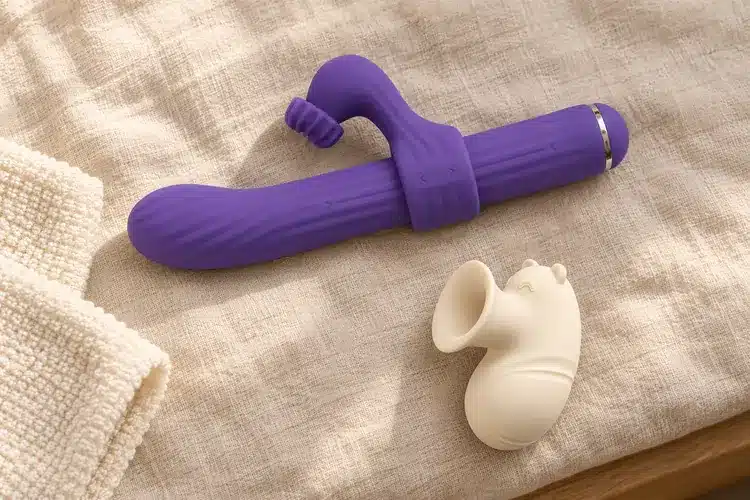
For shared vibration, Secheal Wave is a wand vibrator with interchangeable attachments. Its on-device controls let the person receiving stimulation adjust settings without pairing a phone. Choose an attachment beforehand if changing parts would interrupt the moment; exploring every option is unnecessary.
For nipple stimulation, SecHeal Spark is a nipple suction and vibration massager with hand-adjustable suction and 12 vibration patterns. Suction and vibration provide different sensations to discuss, and suction should be adjusted according to the receiving partner’s feedback. Choose another activity if nipple stimulation or suction is unwanted or uncomfortable.
These products do not treat performance anxiety. Keep them optional, with no expectation of arousal or orgasm. Leave them out if introducing a device adds pressure.

Let Go of Performance Goals
An erection, penetration, or orgasm does not have to determine whether time together was satisfying. Avoid treating the next encounter as a test. A brief conversation about what felt comfortable is enough; there is no need for a performance review.
Respecting Your Own Needs
Share Your Feelings and Boundaries
Supporting him does not require hiding your needs or accepting ongoing uncertainty without discussion.
Be specific: “I’m comfortable taking penetration off the table for now. I’d like to keep talking about affection and what feels good to each of us.”
Discuss unmet needs and sexual compatibility separately from an immediate decision about sex. Accepting a refusal does not prevent you from addressing ongoing concerns about the relationship.
Support Him Without Taking Responsibility
You cannot guarantee a particular sexual response by finding perfect words or providing constant reassurance. Agree on any practical help, such as finding a clinician or attending an appointment, while leaving him responsible for treatment decisions.
Anxiety does not excuse insults, blame, or pressure to cross your boundaries. Both people remain responsible for how they treat each other.
When to Seek Professional Help
Get Recurring Erection Problems Assessed
If erection difficulties recur, encourage him to seek medical assessment for recurring erection difficulties. A primary care clinician or urologist can assess possible physical, medication-related, and psychological contributors.
Having erections at other times does not establish that the problem is entirely psychological. Medication concerns should be discussed with the prescriber before making changes.
Consider Sex Therapy for Ongoing Anxiety
A licensed mental health professional with training in sex therapy can help address ongoing worry, avoidance, and distress. Sessions may focus on communication, expectations, and anxious thinking.
Counseling for erection difficulties can help address anxiety and stress when emotional or mental health factors contribute to ED. A therapist may invite a partner to participate when appropriate.
Individual or joint sessions can be considered according to his needs and both partners’ preferences.

FAQ
Can an experienced guy still have performance anxiety?
Yes. Previous sexual experience does not prevent anxiety with a new partner or during a stressful period. The support he needs depends on his current experience.
How long does performance anxiety last in a new relationship?
There is no fixed timeline. Greater familiarity may help, but persistent anxiety or recurring erection difficulties warrant professional assessment rather than waiting indefinitely.
Should I stop initiating intimacy if he has performance anxiety?
Ask how he would like to be approached. Continue with clear, optional invitations if those are welcome, and accept a refusal without repeated requests.



Leave a Reply