Intimacy can feel stressful when your attention shifts from what feels good to how well you think you’re doing. Worries about staying aroused, lasting long enough, or satisfying a partner can turn a shared experience into a private performance review.
Sexual performance anxiety can create this pressure even when you want intimacy and feel attracted to your partner. Understanding the worry is a starting point for changing expectations and making the experience more comfortable.
What Is Sexual Performance Anxiety?
Sexual performance anxiety is worry about your ability to perform sexually or meet perceived expectations during intimacy. It can interfere with sexual interest, pleasure, and physical responses, and it can affect people of any gender. The term itself is not a standalone medical diagnosis.
Sexual anxiety is broader and may include concerns about vulnerability, safety, pregnancy, or past experiences. Performance anxiety focuses more specifically on questions such as “Will my body respond?” or “Will my partner be disappointed?”
The pressure often follows a cycle:
- Expectation: You believe you must stay aroused, last a certain amount of time, or produce an orgasm.
- Worry: You anticipate that something will go wrong.
- Monitoring: You check your body and your partner’s reactions.
- Increased pressure: Monitoring makes it harder to stay engaged, reinforcing the worry.
After a difficult experience, the next encounter can start to feel like a test you need to pass.
Signs of Sexual Performance Anxiety
Occasional nervousness does not necessarily indicate an ongoing problem. What matters is whether worry repeatedly interferes with the intimacy you want.
Common signs include:
- Feeling tense, distracted, or disconnected during sexual activity.
- Worrying about disappointing a partner.
- Repeatedly checking appearance, arousal, or sexual response.
- Rushing because you fear losing arousal.
- Seeking frequent reassurance about your performance.
- Avoiding intimacy because you anticipate embarrassment.
Anxiety may accompany difficulty becoming aroused, maintaining an erection, or reaching orgasm. However, those changes do not establish anxiety as the cause. For example, erectile difficulties can involve physical and emotional factors, including health conditions, medications, anxiety, and stress. Persistent difficulties deserve assessment rather than assumptions.

What Creates Pressure During Intimacy?
Pressure often grows from the meaning attached to an experience. A pause becomes rejection, a change in arousal becomes failure, or an orgasm becomes proof that everything went well.
Unrealistic Expectations
Pornography and other media offer an incomplete picture of sex. They rarely show the conversations, adjustments, or awkward moments that can be part of real intimacy.
Expecting sex to follow a fixed sequence can create similar pressure. Desire, arousal, penetration, and orgasm do not have to happen in a particular order for an experience to be enjoyable.
Fear of Judgment
Concerns about appearance, attractiveness, or experience can pull attention away from physical sensations.
Fear of judgment also encourages guessing. A quiet partner might be concentrating, but you interpret silence as boredom. A request to change positions might be about comfort, but you hear criticism.
A brief question usually provides better information than trying to read someone’s mind.
Relationship and Personal Stress
Unresolved tension, difficulty expressing boundaries, and previous uncomfortable experiences can contribute to anxiety. Work demands, financial worries, caregiving, and fatigue can also make it harder to focus on intimacy.
Sometimes the source of pressure needs attention outside the bedroom. A different sexual technique cannot resolve every concern.
How to Overcome Sexual Performance Anxiety
Reducing performance anxiety usually involves changing expectations and habits over time. Communication and mindfulness during intimacy can help address pressure by encouraging clearer feedback and attention to present sensations. No technique guarantees a particular physical response.
Shift the Focus to Connection
Agree that intimacy does not have to end in penetration or orgasm. Spend time kissing, touching, or being close without deciding what must happen next.
A simple way to express this is:
“I’d like us to enjoy being close without feeling like we have to get anywhere.”
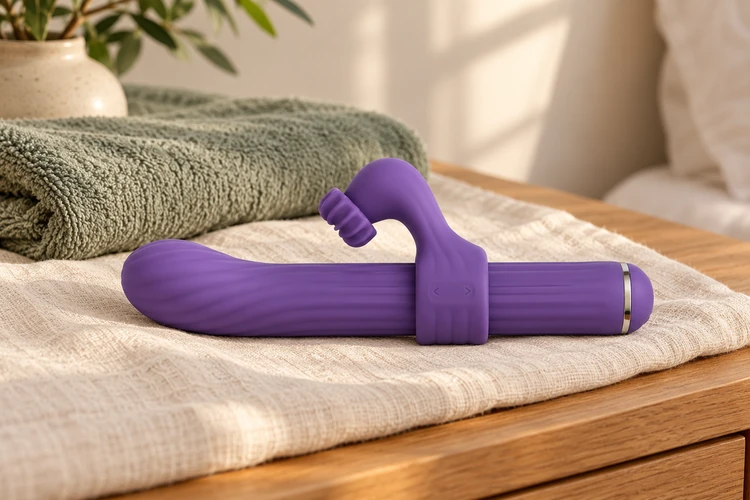
For optional toy use, an adjustable wand with interchangeable attachments provides several ways to explore preferences. Wave’s seven vibration modes and three intensity levels allow changes in rhythm and strength, while interchangeable attachments offer different sensations. Use those choices to discuss what feels comfortable, rather than treating stronger stimulation as better.
Explore Your Own Preferences
Solo exploration is an optional way to notice preferences without interpreting another person’s reactions. Avoid targets for duration or orgasm; pay attention to what you enjoy, what you want to adjust, and when you want to stop.
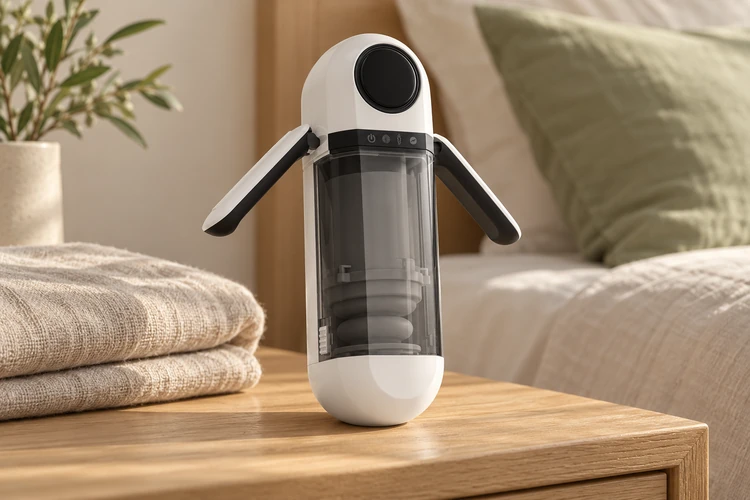
A male stroker with on-device controls offers another approach. Haven combines suction, stroking, and vibration, with built-in controls that require no app pairing. These features allow direct adjustments while exploring different sensations.
What you notice can make conversations more specific: “I prefer a slower start,” or “Please check before changing the intensity.” Toys remain optional pleasure tools, not treatments for anxiety.
Talk About Expectations
Discuss recurring worries at a calm moment outside sexual activity. Explain what happens and what would help:
“Sometimes I get caught up in worrying about how I’m doing. Being able to slow down without making it a big deal would help.”
Ask about your partner’s expectations, too. Something you have been struggling to deliver may never have been a requirement for them.
For long-distance partner play, agree on comfortable settings, shared control, privacy, and how either person can end the session. Clear boundaries leave less uncertainty during the experience.
How to Relax During Sex
Approach relaxation through small, practical adjustments:
- Reduce distractions. Silence notifications and allow time where possible.
- Choose comfort. Adjust your position, surroundings, or pace.
- Breathe easily. Notice breath-holding and return to a comfortable rhythm.
- Focus on sensation. Pay attention to warmth, touch, or another sensation you enjoy.
- Pause when needed. Change activities or stop without treating it as failure.
Consent remains ongoing. Neither person needs to continue to prevent disappointment, and you do not need to eliminate every anxious feeling before enjoying intimacy.

How to Stop Overthinking During Sex
Trying to force anxious thoughts away can become another source of pressure. Instead, notice the thought and gently redirect your attention.
| When this thought appears | A more useful response |
| “Am I performing well enough?” | Return to what feels comfortable and enjoyable. |
| “They must be disappointed.” | Check in briefly instead of guessing. |
| “My body has to respond immediately.” | Allow time or choose a different activity. |
| “This has to end in orgasm.” | Focus on the experience without setting an endpoint. |
For example, when “What if I lose my erection?” appears, acknowledges, “That’s the worry again,” and returns to touch or conversation.
You may need to redirect your attention several times. The aim is less self-evaluation, not perfect concentration.
How Partners Can Help
Ask what support feels useful. Some people appreciate brief reassurance; others prefer to change activities without discussing every physical response.
Helpful phrases include:
- “There’s no rush.”
- “What would feel comfortable?”
- “Would you like to keep going, change something, or stop?”
Avoid performance jokes, comparisons with previous partners, and demands for an immediate explanation. A physical response does not, by itself, reveal someone’s attraction or feelings.
A partner can listen and respect boundaries without taking responsibility for resolving the anxiety.

When to Seek Support
Professional support is appropriate when anxiety repeatedly causes distress, leads to unwanted avoidance, or creates relationship strain.
Persistent sexual difficulties, sudden changes, or pain also warrant medical assessment. A healthcare professional can consider physical health, medications, and emotional factors rather than assuming the problem is “just anxiety.”
A licensed therapist with specialized training in sexual health can address performance fears, communication difficulties, and related emotional concerns. Medical care and therapy may both be useful when physical and psychological factors overlap.
FAQ
Can sexual performance anxiety happen with a long-term partner?
Yes. Familiarity does not eliminate stress, body image concerns, or memories of previous difficulties. Pressure can also develop when someone believes they should already know exactly how to please their partner.
Does performance anxiety mean a lack of attraction?
No. Someone can want intimacy and feel attracted to a partner while also feeling tense, distracted, or worried about their physical response. Anxiety alone does not establish a lack of attraction.
Can sexual performance anxiety affect any gender?
Yes. Concerns can involve erections, arousal, lubrication, orgasm, appearance, or satisfying a partner. The central issue is pressure around sexual expectations, rather than one particular physical response.
How long does sexual performance anxiety last?
There is no fixed timeline. Occasional worry may ease as circumstances change, while recurring anxiety may need more focused support. The degree of distress and interference matters more than reaching a particular time threshold.