

Menopause can change how your body responds to touch. A sensation you once enjoyed may feel too intense, or you may need more time to become aroused. Sex toys offer a way to explore what feels good now, alone or with a partner, at a pace that suits you.
Table of Contents
Menopause, Comfort, and Desire
Dryness and sensitivity
Hormonal changes around menopause can leave vulvar and vaginal tissues drier and more sensitive. Friction may irritate the vulva, and penetration may become uncomfortable. What feels good to someone else may not suit you.
Lubricant reduces friction during sexual activity. A vaginal moisturizer is used more regularly to help with dryness between sexual encounters. The NHS guide to vaginal dryness explains both options. If dryness persists or affects everyday life, ask a healthcare professional about other treatments.
Changes in arousal and desire
Menopause does not affect everyone's desire in the same way. Sleep problems, stress, medication, relationship changes, and discomfort can all influence interest in sex. Desire may also take longer to emerge than it used to. The Menopause Society's sexual health guide discusses these changes and the different ways they can affect arousal.
There is no required frequency for sex or need to make orgasm the goal. If a change in desire troubles you, a clinician can help you look at possible causes. A toy may make exploration enjoyable, but it will not resolve every reason your desire has changed.
How Sex Toys May Help
External pleasure without penetration
If penetration hurts, an external vibrator offers another way to explore touch. You can place it against clothing or use it lightly around the vulva, adjusting pressure and intensity as you go. If direct contact with the clitoris feels too strong, try nearby areas.
External stimulation can be satisfying by itself or part of intimacy with a partner. It does not have to lead to penetration.
Exploring at your own pace
A toy lets you change the sensation or stop immediately. Begin with a low setting and notice how your body responds; comfort may vary from day to day.
If you are playing with a partner, describe what feels good and agree that either of you can pause. If stimulation stings, burns, or causes pain, stop. Increasing the intensity will not solve the underlying discomfort.

Choosing a Comfortable Toy
Gentle vibration and adjustable settings
Look for easy-to-reach controls, a low starting setting, and a contact surface that suits external use. An adjustable angle may also help you find a comfortable position without pressing harder.
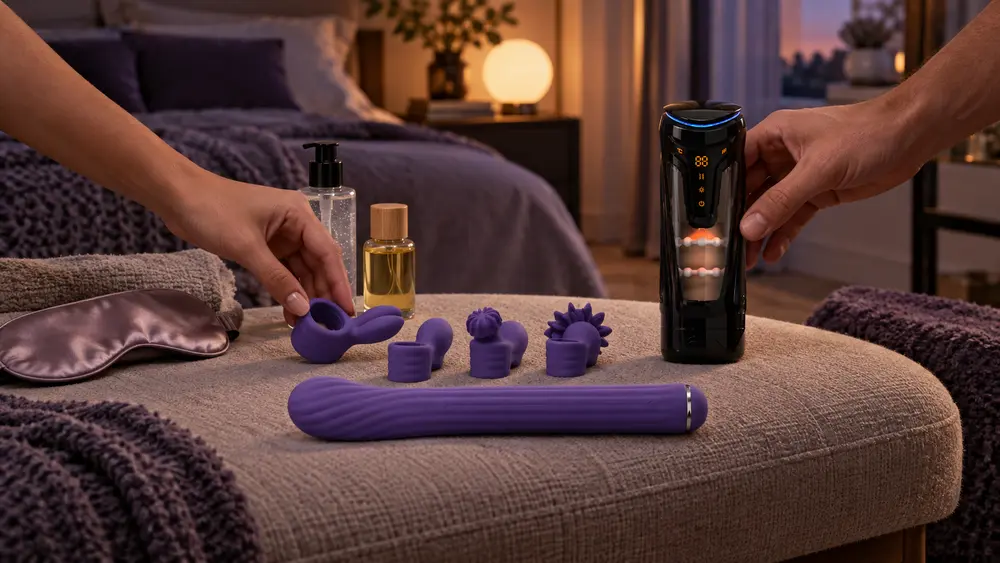
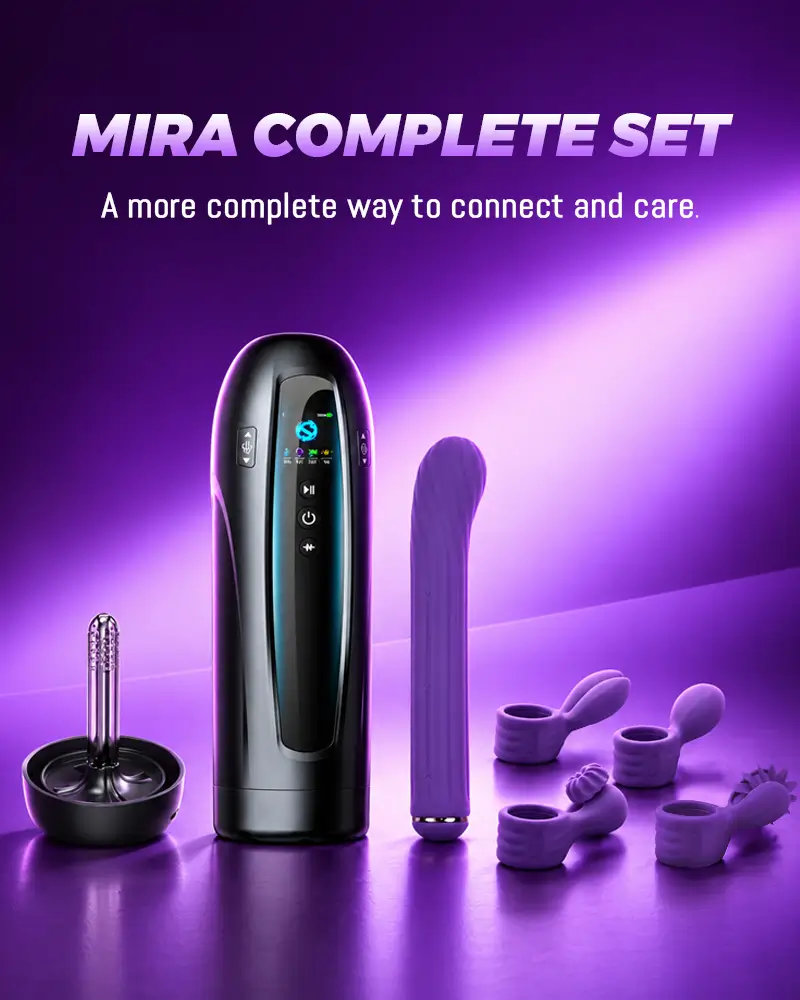
The Secheal Wave adjustable wand vibrator has a broad external head for body and clitoral stimulation, an adjustable angle, and three intensity levels. Those features let you vary the contact point and strength without penetration. It comes with four interchangeable heads, including options for internal use, but there is no need to use those if insertion is uncomfortable. The settings offer choice, not a treatment for menopausal dryness or pain.
Shape, size, and materials
For an insertable toy, consider its width, firmness, and surface texture. A smaller, smooth option may feel less intimidating, but there is no size that works for everyone. Never force insertion, even with lubricant.
Before buying, check what the contact surface is made of and how each part should be cleaned. Inspect the toy before use; replace it if the surface is damaged or cannot be cleaned properly. Terms such as “body-safe” are less useful than specific material and care information.
Lubricants and Safer Use
Choosing a compatible lubricant
A plain, water-based lubricant works with most toys and condoms, making it a practical first choice. If a product causes burning or irritation, stop using it. For sensitive skin, an unflavored, fragrance-free option may be more comfortable.
Check the toy manufacturer's instructions before using silicone-based lubricant with a silicone toy; it can damage some silicone surfaces. Oil-based lubricants can weaken latex condoms. Lubricant should reduce friction, not mask pain.
Starting gently and stopping if it hurts
Give yourself time to become aroused, add lubricant where friction occurs, and start with the lowest comfortable setting. Increase the intensity only when it feels good.
Stop if you feel sharp pain, persistent burning, or notice bleeding. Discomfort is a reason to reassess what you are doing, not a signal to push through.
Cleaning and sharing toys safely
Follow the product's cleaning instructions, particularly for removable heads and electronic parts. Clean the toy before and after use, pay attention to seams, and let it dry fully before storage. Do not submerge a motorized toy unless its instructions permit it.
When sharing a toy, clean it between users and put on a new condom for each person. Change the condom and clean the toy before switching from anal to vaginal use. Sexually transmitted infections remain possible after menopause.
When to seek medical advice
Speak with a healthcare professional if dryness does not improve with self-care, pain keeps returning, or you notice unusual discharge. Bleeding after sex or after menopause should be checked. A clinician can assess the cause and discuss treatments for ongoing dryness or pain.
FAQ
Are sex toys safe after menopause?
Many people can use them comfortably. Choose a toy you can clean properly, start with a setting that feels gentle to you, and use compatible lubricant if needed. Stop if it hurts, and seek medical advice for persistent pain or bleeding.
Which toys may feel best with vaginal dryness?
An external vibrator with adjustable intensity may be a comfortable starting point because it does not require penetration. Your preferred shape and sensation matter more than a product label saying it is “for menopause.” Persistent dryness may need care beyond a toy or lubricant.
Can a vibrator help with low desire?
It can help you discover sensations you enjoy, but it is not a treatment for low desire. If the change bothers you, consider possible contributors such as sleep, stress, pain, medication, and relationship concerns. A healthcare professional can help you explore them.
What lubricant should I use with a silicone toy?
Water-based lubricant is a straightforward choice. Check the toy's instructions before using a silicone-based product, since it may damage the surface. If you use a latex condom, avoid oil-based lubricant.


Leave a Reply